
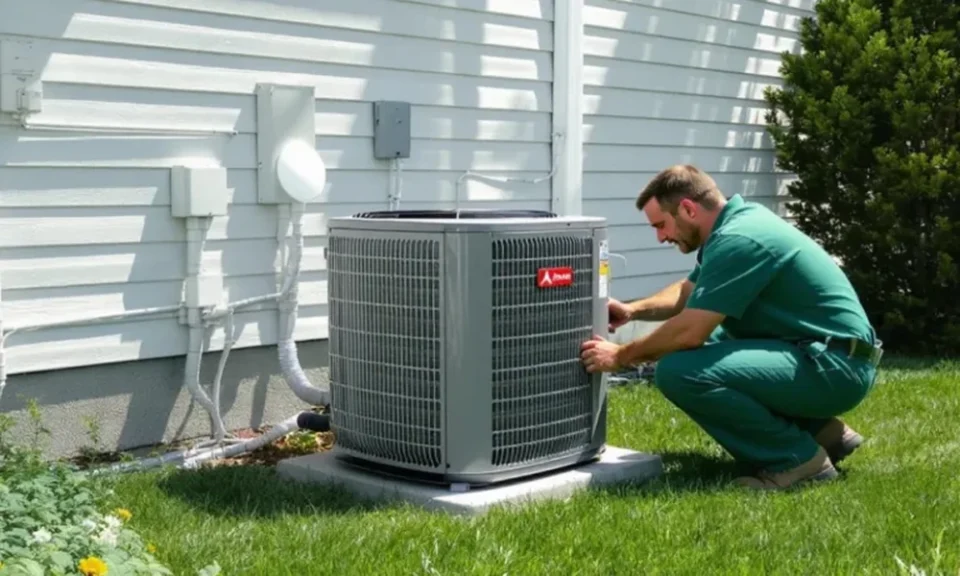
Eleven summers in, your condenser makes a sound like a coffee can full of gravel, and the house won’t drop below 78 degrees until the sun goes down. You’ve got three choices: a service call for a unit that’s older than your dog, a replacement quote that made you laugh out loud, or an afternoon with a multimeter and a parts counter receipt. I’ve done all three, and the third one wins more often than you’d think.
Here’s the plan. We’ll walk through the parts that actually fail on older units, how to tell a cheap fix from a death sentence, and a short decision rule I use myself before I spend a dime. If you live somewhere with real humidity and a five-month cooling season, this saves you money every single year.
Why older units fail in Birmingham more often than most places
Alabama’s climate is brutal on outdoor equipment. Your condenser sits in the shade of a slab and runs from April into October, which adds up to more compressor hours in one season than a unit in Minnesota sees in three. That duty cycle wears out capacitors, contactors, and fan motors long before the compressor itself gives up. Most of the time, the scary symptom and the actual failure are miles apart.
I learned that one the hard way. A unit that wouldn’t start at all turned out to need a fifty dollar capacitor, not a five thousand dollar system. The compressor was fine. Everything else around it had simply aged out first.
Home cooling demand tracks the weather, and the U.S. Energy Information Administration has documented how much of household electricity goes toward air conditioning in hot states. Translation: every extra week you squeeze out of a struggling unit is real money back in your pocket.
What actually breaks on an old air conditioner
After a few seasons, the failure list gets pretty predictable. These are the components worth checking before you call anyone.
- Start and run capacitors. Most common failure by a wide margin. Bulging tops or a meter reading way off the label means replace it.
- Contactors. The relay that feeds power to the compressor. Pitted contacts cause intermittent short cycling.
- Condenser fan motors. Bearings dry out from age and heat. Listen for grinding.
- Thermostats. Old mechanical units drift out of calibration, so the house never quite hits setpoint.
- Filter and coil condition. A clogged filter starves airflow and freezes the evaporator coil. This one costs almost nothing to fix.
Notice that the compressor is not on the list. It’s the expensive part, and it’s usually the survivor. People replace whole systems because of a bad capacitor every day, and it drives me a little crazy.
Refrigerant is a different animal. If your system is low, it leaked, and refrigerant doesn’t get consumed like gas in a car. Topping it off without finding the leak is throwing money into the sky. The U.S. Environmental Protection Agency regulates refrigerants and tracks how these rules affect homeowners, and the short version is that older refrigerants keep getting more expensive to buy and harder to justify.
Diagnosing the problem yourself in one afternoon
You don’t need a van full of tools. You need a multimeter, a screwdriver, and about two hours of patience. Work in this order.
- Kill power at the breaker and the disconnect. Non negotiable. Capacitors hold a charge and they bite.
- Pull the panel and look. Actually look. Bulging, rust streaks, melted wire nuts, and bug nests all tell stories.
- Test the capacitor. Discharge it, then check microfarads against the rating printed on the can. More than a small drift and it goes in the trash.
- Check the contactor. Pitted, blackened contacts mean replacement, and it’s a fifteen minute job.
- Spin the fan blade by hand. If it wobbles or grinds, the motor bearings are done.
- Replace the filter and hose down the outdoor coil. Free, and it fixes a surprising number of complaints.
Now the part where most homeowners get stuck. You’ve found the problem, and you need the correct part number, not a lookalike that will burn out in six weeks. This is exactly where the appliance and HVAC trade counter earns its keep, and it’s why I keep a supply house contact saved in my phone. Sourcing refrigeration parts in Birmingham AL from a counter that stocks real inventory means you walk out with the right capacitor or contactor the same day instead of rolling the dice on a marketplace listing.
Bring the old part with you. Every time. Match the microfarad rating, the voltage rating, and the physical size. A capacitor that fits but reads wrong will fail fast and take the fan motor or compressor with it.
Deciding whether your unit is worth saving
Here’s the rule I use, and it’s held up across three houses. If the repair costs less than a quarter of what a new system would run, and the unit is under twelve years old, fix it. If it’s past fifteen years and you’re on your second major repair in two years, put that money toward replacement and stop bleeding cash.
Age isn’t just about repair frequency. Older systems run on refrigerants that are being phased down, so future repairs get pricier as parts availability shrinks. The Bureau of Labor Statistics tracks employment in the HVAC trade, and the steady demand for technicians tells you everything about how often these systems break in a hot climate. Labor isn’t getting cheaper either.
One more thing, and this is where I’ll take a side. Maintaining an older unit is almost always smarter than replacing it early, as long as the compressor and coil are healthy. I’ve watched people spend ten thousand dollars to save four hundred a year. That math doesn’t work for a long time, if ever.
A seasonal checklist that takes thirty minutes
Do these things in April, before the first real heat wave. You’ll catch small problems while they’re still small.
- Replace the filter. Then mark the date on it so you actually remember.
- Clear vegetation, mulch, and grass clippings from around the outdoor unit. Give it two feet of breathing room.
- Rinse the condenser coil from the inside out with a garden hose, not a pressure washer.
- Listen for grinding, buzzing, or clicking at startup. Each sound points to a specific part.
- Check the drain line for clogs and algae. A slow drain means water damage in August.
- Test the thermostat against a separate thermometer and note any drift.
Keep a small box of spares. A spare capacitor, a contactor, and a fan motor sitting on a shelf will turn a weekend crisis into a twenty minute fix. The HVAC trade counter is the best place to build that kit because you can match part numbers in person and skip the shipping wait.
When to stop and call a pro
Some jobs need a license, a recovery machine, and insurance. Refrigerant work is the big one. Electrical diagnosis past the disconnect, compressor replacement, and anything involving a gas furnace are all calls I make without hesitation. Knowing where that line sits saves you from a dangerous mistake and expensive damage.
But plenty of the work doesn’t need a professional at all. Capacitors, contactors, thermostats, filters, and fan motors are fair game for a careful homeowner with a meter, and the parts counter is the best resource in town for getting the right component in your hand the same day.
So here’s your move this week. Go outside, kill the power, and take a look at that unit while it’s still mild out. One afternoon now beats a hot night in July with a house full of unhappy people and a service wait you can’t control. What’s the last repair you put off until it became an emergency?
